

Programmes under Mission Vatsalya Department of Women & Child Development Govt. of Odisha.
Role of the District Child Protection Unit (DCPU)
- The District Child Protection Unit (DCPU) acts as the nodal agency for processing and forwarding all applications related to sponsorship assistance.
- It ensures the preparation and verification of essential documents, including:
- Individual Care Plan (ICP)
- Home Study Report (HSR)
- Counselling and Case History Records
- The DCPU plays a proactive role in facilitating enrollment of the child in Anganwadi centers, schools, or other educational institutions, based on the child’s age and educational needs.
- It assists families in opening a bank account in the name of the child or caregiver to enable direct online transfer of sponsorship funds in a transparent manner.
- Regular home visits and follow-ups are conducted to:
- Monitor the child’s well-being
- Track academic and emotional progress
- Ensure proper utilization of sponsorship support
- The unit also helps link families with other welfare schemes, such as health, nutrition, and vocational training, to enhance family sustainability.
- It maintains coordination with the Sponsorship and Foster Care Approval Committee (SFCAC) for case approvals, renewals, and periodic review.
Staff Details OF DCPU, Bhadrak
Sl No | Name | Designation | Contact Number |
1 | Abinash Mohanty | DCPO (District Child Protection Officer) | 8847812188 |
2 | Biswanarayan Panda | POIC (Protectional Officer Institutional care ) | 9438064262 |
3 | Swagatika Barik | PONIC (Protectional Officer Non-Institutional care ) | 7978747147 |
4 | Subrat Kumar Das | SW (Social Worker) CUM Legal Probation Officer In-charge Public Information Officer(PIO) | 9437731903
|
5 | Dhiraj Kumar Barik | Accountant | 9776870810 |
6 | Sudarsan Badara | ADEO(Assistant -Cum -DEO) | 7978161260 |
7 | Mahesh Chandra dash | ORW M(Outreach Worker Male ) | 7381690328 |
8 | Damayanti Dash | ORW F(Outreach Worker Female ) | 8908400925 |
9 | Nabin Chandra Behera | DA ( Data Analyst) | 8596822477 |
10 | Kuldip Jena | Counsellor | 7873938120 |
Staff details of Child line, Bhadrak
Sl No | Name | Designation | Contact Number |
1 | Subhashree Padhiary | (Project Coordinator) | 6370426253 |
2 | Laxman kumar Jena | (Counsellor) | 9090624150 |
3 | Digbijaya Mohanty | (Supervisor) | 9348318594 |
4 | Kanhucharan Mallick | (Supervisor) | 8766844315 |
5 | Chandrakant Gocchayat | (Case Worker) | 7789847917 |
6 | Lakshmikanta Sethi | (Case worker) | 6370589322 |
7 | Sanjulata Ghosh | (Case Worker) | 7077609624 |
Role of the Sponsorship and Foster Care Approval Committee (SFCAC)
- The Sponsorship and Foster Care Approval Committee (SFCAC) has been constituted in every district to oversee and guide the implementation of sponsorship and foster care programs under the Juvenile Justice (Care and Protection of Children) Act.
- The committee is responsible for evaluating the eligibility and need for sponsorship support by scrutinizing documents such as:
- Home Study Reports (HSR)
- Individual Care Plans (ICP)
- Counselling records and socio-economic assessments
- Based on the assessment, the SFCAC recommends the duration and amount of sponsorship support, considering the best interest of the child and the family's sustainability.
- The committee also ensures periodic monitoring and review of each sponsorship case to evaluate:
- The child’s development and welfare
- The family’s financial and social progress
- The proper utilization of funds
- In cases requiring extension or discontinuation of support, the SFCAC provides clear recommendations based on updated reports and follow-up findings.
- The committee may also coordinate with District Child Protection Units (DCPUs), Child Welfare Committees (CWCs), and Non-Governmental Organizations (NGOs) to ensure holistic support and service linkage for the child and family.
- Additionally, SFCAC helps identify and address cases of risk or potential breakdown in care, recommending alternative interventions like foster care or institutional care when necessary.
Role of the Child Welfare Committee (CWC)
- The Child Welfare Committee (CWC), as constituted under the Juvenile Justice (Care and Protection of Children) Act, is the competent authority to issue Sponsorship Placement Orders.
- Based on the recommendations of the District Child Protection Unit (DCPU)and the Sponsorship and Foster Care Approval Committee (SFCAC), the CWC formally approves and authorizes sponsorship placements for eligible children.
- The CWC also plays a key role in reviewing the status of sponsored children, especially in cases where continued support or alternate care arrangements may be required.
NON INSTITUTIONAL SERVICES
Sponsorship
Sponsorship is a form of conditional financial support provided to:
- Children residing in recognized/unrecognized Child Care Institutions (CCIs)
- These children can potentially be restored to their biological or extended families with the help of such support.
- Children rescued from difficult circumstances, such as:
- Child labor
- Sexual abuse
- Victims of trafficking
in such cases, sponsorship is extended to support both the children and their families, helping prevent further exploitation.
- Children belonging to families living in extreme deprivation or exploitation
- This support aims to enable the child to continue living with their family, thereby reducing the risk of institutionalization.
Financial Provision
- Amount: ₹4000 per child per month for a maximum of 2 children per family, subject to revision in norms from time to time.
- Duration: Maximum up to three (3) years or up to the child’s 18th birthday, whichever is earlier, except in exceptional circumstances.
- The term of the sponsorship will be decided by the Sponsorship and Foster Care Approval Committee (SFCAC).
Conditions for Termination of Sponsorship Support
Sponsorship support may be discontinued under the following conditions:
- Age Limit:
- The child attains 18 years of age, marking the end of eligibility unless exceptional circumstances are verified and approved.
- Improved Financial Condition:
- If the economic condition of the family improves significantly and they are able to meet the educational and basic needs of the child independently, sponsorship may be withdrawn.
- Discontinuation of Education:
- If the child discontinues attendance at school or anganwadi center without valid reason, sponsorship shall be terminated.
- A minimum 75% attendance is required, except in cases of disability, illness, or special circumstances, which must be verified by DCPU.
- Loss of Parental Capability:
- If both parents become incapacitated, deceased, or unfit to care for the child, the case may be referred for alternate care options (e.g., foster care or institutional care) and sponsorship may end.
- Institutionalization of the Child:
- Sponsorship is terminated if the child is placed in a Child Care Institution (CCI) for reasons such as neglect, abuse, or abandonment.
- Misuse of Funds:
- If it is found that the sponsorship funds are being misused—not being spent on the child’s needs or diverted for unrelated purposes—the support will be discontinued.
- Neglect or Exploitation:
- If the child is found to be persistently neglected, exploited, or ill-treated by the family or extended caregivers, even after warnings and interventions.
- Relocation Without Intimation:
- If the child and family relocate without informing the DCPU, resulting in inability to monitor the child’s well-being, support may be terminated.
- Refusal of Services:
- If the family refuses to cooperate with follow-up visits, counselling, or refuses services offered for the welfare of the child.
- Recommendation by the SFCAC/CWC:
- Based on periodic review, either the SFCAC or CWC may recommend termination if it is no longer in the best interest of the child to continue sponsorship.
What is Adoption?
According to Sub-section 2 of Section 2 of the Juvenile Justice (Care and Protection of Children) Act, 2015, adoption is defined as the legal process by which a child is permanently separated from their biological parents and becomes the lawful child of the adoptive parents, with all rights, responsibilities, and privileges equivalent to those of a biological child.
Who Can Adopt?
As per Section 57 of the Juvenile Justice (Care and Protection of Children) Act, 2015, the following are the eligibility criteria for prospective adoptive parents (PAPs):
- The PAPs must be physically healthy, mentally alert, financially stable, and motivated to provide a nurturing and secure environment for the child.
- In the case of a married couple, mutual consent of both spouses is mandatory for adoption.
- Single or divorced individuals are permitted to adopt, provided they meet all required criteria and comply with the regulations set by the competent authority.
- However, a single male is not permitted to adopt a girl child.
Additional Eligibility Conditions
- PAPs must be physically, mentally, and emotionally sound, financially capable, and free from any life-threatening illness.
- Adoption is open to all qualified individuals regardless of marital status or whether they already have biological children, subject to the following:
- Married couples must provide consent from both spouses.
- A single female can adopt a child of any gender.
- A single male is not permitted to adopt a female child.
- Couples must have a minimum of two years of stable marital relationship before they can adopt.
Age Criteria for Prospective Adoptive Parents
Eligibility to adopt is also based on the age of the prospective adoptive parents at the time of registration:
Age of the Child | Maximum Composite Age of Couple | Maximum Age of Single Parent |
Up to 2 years | 85 years | 40 years |
Above 2 up to 4 years | 90 years | 45 years |
Above 4 Up to 8 years | 100 years | 50 years |
Above 8 up to 18 years | 110 years | 55 years |
for couples, the combined age of both parents is considered.
there must be a minimum age gap of 25 years between the child and at least one of the adoptive parents.
Age restrictions do not apply in cases of relative adoption or adoption by step-parents.
Couples with two or more children are generally not eligible to adopt, except:
- In the case of special needs children
- Hard-to-place children
- Step-parent or relative adoptions
Online Registration Process
Prospective adoptive parents must complete online registration through the official website: www.cara.nic.in
Key Instructions:
- Registration is open to Indian citizens residing in India.
- Provide a valid residential address and telephone number with area code.
- At least one of the adoptive parents must possess a Permanent Account Number (PAN) card. Upload in PDF format (max 512 KB).
- Upload required photographs:
- Single parent: Personal photo
- Couple/Family: Family photo
- Format: .jpg, size: 3.5 x 4.5 cm, not exceeding 1 MB
- An active email ID and mobile number are mandatory.
- Upon successful registration, an acknowledgement letter with registration and login credentials will be issued.
- If misplaced, credentials can be retrieved via the "Forgot Password" link on the Track Status page.
Documents to be uploaded
- Photograph (postcard size)
- Birth certificate
- Proof of residence (Aadhaar card, voter ID, driving license, passport, electricity/telephone bill)
- Income proof from the last year (salary slip, income certificate, or IT return)
- Marriage certificate (if married)
- Divorce decree (if divorced)
- Death certificate of spouse (if widowed)
- Medical fitness certificate from a registered practitioner confirming the PAPs are healthy and free from chronic, contagious, or life-threatening diseases
Post-Registration Steps
- Contact the authorized adoption agency after completing registration.
- Present original documents for verification.
- The adoption agency will determine eligibility based on the documents and home study.
After Care
The Juvenile Justice Act offers an After Care Program to assist children who, after reaching 18 years of age, no longer have family support or other resources when leaving institutional care. This program helps these children successfully transition from institutional life to independent living, ensuring they adapt to society and gradually shift away from dependency on state-run institutions.
The District Child Protection Units (DCPU) will identify appropriate voluntary organizations to manage these After Care Programs. These organizations are responsible for designing a comprehensive after-care plan that will last for three years, in alignment with the provisions of the Juvenile Justice (Care and Protection of Children) Act 2000 and the associated rules established by central and state governments. Key elements of the program may include:
- Temporary group housing for small groups of 6-8 young individuals.
- Encouragement to learn a trade or seek employment, contributing a portion of their earnings towards rent and the maintenance of the housing.
- A gradual shift towards self-sufficiency, with the goal of eventually moving out of the group home to live independently once they have saved enough through their work.
- The availability of a peer counselor who regularly engages with the group to support their rehabilitation, offering creative outlets to manage challenges and emotional crises.
- A stipend during vocational training to support the youth until they secure employment.
- Assistance in obtaining loans for young people interested in starting their own businesses or entrepreneurial ventures.
Foster Care
Foster Care involves a temporary arrangement where a child is placed with either a relative or an unrelated family, with the primary aim of eventually reuniting the child with their biological family when conditions improve. This arrangement is designed to prevent the institutionalization of children facing difficult circumstances. The focus is on children who are not legally free for adoption, and whose parents are unable to care for them due to illness, death, abandonment, or other personal crises.
The Child Welfare Committee in Bhadrak is the authorized body responsible for granting approval for Foster Care placements. Each district will form a Sponsorship and Foster Care Approval Committee to oversee and manage the effective implementation and monitoring of both the Sponsorship and Foster Care Programs.
INSTITUTIONAL SERVICES
Institutional Care
Institutional Care is provided to Children in Need of Care and Protection (CNCP) as well as Juveniles in Conflict with Law, offering both short-term and long-term support based on individual requirements as outlined in the Juvenile Justice (Care and Protection of Children) Act and its corresponding Rules. These institutional services are designed to address a wide range of needs, including safe shelter, nutritious food, clothing, healthcare, education, life skills, vocational training, and other essential services. Additionally, efforts are made to support family reintegration and overall rehabilitation of the child.
Under the Integrated Child Protection Scheme (ICPS), there are provisions for the establishment of new institutional care facilities and the upkeep of existing ones for both CNCP and children in conflict with the law.
The Mission Vatsalya supports both the establishment of new institutions and the maintenance of existing ones for children from both categories. The institutional care services under Mission Vatsalya can be broadly categorized as follows:
- For Children in Conflict with the Law: Observation Homes and Special Homes
- For Children in Need of Care and Protection: Shelter Homes and Children’s Homes
- For Children with Special Needs: Specialized Services
- For unique or emerging requirements: Need-based/Innovative Interventions
- For POCSO Victims : Fit institutions
When a child is found to be in need of care or in conflict with the law:
- The Child Welfare Committee (CWC) handles cases involving CNCP.
- The Juvenile Justice Board (JJB) handles cases involving juveniles in conflict with the law.
It's important to note that institutional care is seen as a last resort. The Child Protection Services framework prioritizes alternative care arrangements in the following order:
- Preservation of the biological family
- Kinship care
- In-country adoption
- Foster care
- Inter-country adoption
- Institutional care
Only when other options are not viable is a child referred to institutional care. The CWC is the legal authority responsible for recommending such placements.
Statutory Bodies under the Juvenile Justice System
1. Child Welfare Committee (CWC)
As per Section 27 of the Juvenile Justice (Care and Protection of Children) Act, 2015, and Rule 15 of the Model Rules (2016), the State Government is empowered to constitute Child Welfare Committees (CWCs) in each district. These committees are vested with authority to handle matters relating to Children in Need of Care and Protection (CNCP).
According to Section 29 of the Act, the Committee has the exclusive power to make decisions related to the care, protection, treatment, development, and rehabilitation of CNCP. The committee functions independently of other legal systems for such children.
Under Section 30, the key responsibilities of the CWC include:
- Receiving and taking cognizance of children brought before it.
- Inquiring into the child’s safety, wellbeing, and circumstances.
- Assigning social investigation tasks to Child Welfare Officers, NGOs, or other officials.
- Declaring fit persons for care of children.
- Recommending foster care or suitable institutional care based on the child’s profile.
- Overseeing implementation of the child's individual care plan.
- Selecting appropriate registered institutions based on the child’s needs.
- Visiting child care institutions at least twice a month and advising improvements.
- Supervising the execution of surrender deeds, ensuring reconsideration time for parents.
- Making efforts to reunite lost/abandoned children with families.
- Declaring children legally free for adoption after due inquiry.
- Acting on its own motion in the interest of unidentified CNCP.
- Coordinating with police and other departments on rehabilitation of sexually abused children.
- Referring relevant cases from the Juvenile Justice Board.
- Ensuring inter-agency coordination for child protection.
- Investigating abuse complaints in child care institutions.
- Ensuring access to legal aid.
- Performing any other legally prescribed duties.
2. Juvenile Justice Board (JJB)
Under Section 4 of the Juvenile Justice (Care and Protection of Children) Act, 2015, read with Rule 3 of the Model Rules, the State Government establishes Juvenile Justice Boards (JJBs) at the district level. These Boards are responsible for addressing cases concerning Children in Conflict with the Law (CCL).
According to Section 8, JJBs have exclusive jurisdiction over all legal proceedings involving CCL, overriding other laws unless otherwise specified. Additionally, the High Court and Children’s Court may exercise similar powers when dealing with appeals or revisions.
Under Subsection 3 of Section 8, the JJB is entrusted with the following roles:
- Ensuring active and informed involvement of the child and guardian throughout proceedings.
- Safeguarding the child's rights during apprehension, inquiry, rehabilitation, and aftercare.
- Ensuring legal aid availability through legal services authorities.
- Directing social investigations to be completed within 15 days of first appearance.
- Conducting inquiries and making decisions under Section 14.
- Transferring cases to the CWC when the child is also deemed in need of care.
- Issuing final orders, including a care and rehabilitation plan with follow-up responsibilities.
- Declaring fit persons for the care of such children.
- Conducting monthly inspections of facilities and advising improvements.
- Directing police to register FIRs when children are victims of offences.
- Investigating cases of CNCP if requested by a Committee.
- Checking adult jails for underage detainees and ensuring their immediate transfer.
- Performing any additional duties prescribed by law.
3. Special Juvenile Police Units (SJPUs)
In compliance with Section 107 of the Juvenile Justice (Care and Protection of Children) Act, 2015 and the corresponding Rules, Special Juvenile Police Units (SJPUs) have been established in every district. As per Home Department Notification No. 37757 HRPC (A) 4/2012 dated 24.09.2012, the structure of each SJPU includes:
- Chairperson: Deputy Superintendent of Police (HRPC) or ACP of the district.
- Members: Child Welfare Police Officers from all police stations within the district.
- Additional Members: Two social workers associated with the District Child Protection Unit (DCPU).
These units play a crucial role in handling juvenile cases sensitively and in accordance with child protection laws.
MISSION
To ensure the safety, security, and holistic development of children in Bhadrak district by implementing child protection laws and schemes effectively. The DCPU aims to create a protective environment for children, emphasizing family-based care and community involvement.
VISION
To build a child-friendly Bhadrak where every child enjoys their rights to survival, development, protection, and participation. The vision encompasses strengthening institutional and non-institutional care systems, promoting preventive measures, and fostering community awareness to safeguard children's well-being.
Core Objectives and Functions
The DCPU Bhadrak undertakes several key responsibilities:
- Implementation of Child Protection Laws: Ensuring effective application of the Juvenile Justice (Care and Protection of Children) Act and related legislations at the district level.
- Identification and Support: Recognizing families at risk and children in need of care and protection, and providing necessary interventions. Data Management: Creating and maintaining a district-specific database to monitor trends and patterns concerning vulnerable children.
- Service Mapping: Regularly mapping all child-related services in the district to create a comprehensive resource directory for stakeholders.
- Promotion of Family-Based Care: Implementing and supporting non-institutional services such as sponsorship, foster care, adoption, and aftercare.
- Institutional Coordination: Facilitating the establishment and functioning of Child Welfare Committees (CWC), Juvenile Justice Boards (JJB), and Special Juvenile Police Units (SJPU) in the district.
- Capacity Building: Training and building the capacity of all personnel involved in child protection services, including government and non-government stakeholders.
- Monitoring and Supervision: Supervising and monitoring all institutions or agencies providing residential facilities to children in the district.
- Community Engagement: Organizing quarterly meetings with stakeholders, including NGOs, Child line services, and members of the public, to review progress and implementation of child protection measures.
- Legal Support: Facilitating access to legal services for children and ensuring their rights are upheld throughout legal proceedings.
ACHIEVEMENTS
Non institutional services
The District Child Protection Unit (DCPU) has made remarkable progress in promoting and strengthening non-institutional care services such as foster care, sponsorship, adoption, Ashirband and Joshada Yojana. These services have allowed children to grow up in family-like environments, ensuring emotional stability and social integration. One notable achievement was the successful placement of a sibling group into foster care, preventing their separation and ensuring their continued education and well-being. Through the sponsorship program, several economically disadvantaged families received financial assistance to support their children's schooling and healthcare needs, thereby reducing the risk of institutionalization. These efforts highlight DCPU’s commitment to upholding every child’s right to a family and community-based care environment.
ASHIRBAD YOJANA: In Bhadrak district, the District Child Protection Unit (DCPU) played a crucial role in implementing the Ashirbad Yojana.The DCPU, located at the Collectorate Campus in Bhadrak, was responsible for identifying eligible children, processing applications, and ensuring timely disbursement of financial assistance. For instance, a child from Bhadrak who lost both parents to COVID-19 was enrolled in the scheme and began receiving ₹2,500 monthly, along with support for education and healthcare. The DCPU also coordinated with local bodies and frontline workers to ensure comprehensive support for the beneficiaries
YASHODA YOJANA: The Yashada Yojana, implemented by the District Child Protection Unit (DCPU), Bhadrak, has emerged as a transformative initiative aimed at empowering vulnerable adolescent girls through education, skill development, and health awareness. Since its launch, the scheme has successfully reached over 93 beneficiaries across urban and rural areas of the district. A key achievement of the program is the vocational training initiative, under which girls were trained in tailoring, digital literacy, and spoken English, significantly enhancing their employability. For instance, Biswarupa Das, a 20-year-old from Basudevpur block, who had previously dropped out of school due to financial constraints, re-enrolled in education and completed a tailoring course through Yashada Yojana. Today, she earns a steady income by running her own home-based boutique. The DCPU continues to monitor the progress of all beneficiaries, ensuring they have access to further educational and economic opportunities. This success reflects the scheme's strong commitment to building a self-reliant and confident future generation.
Institutional services
The District Child Protection Unit (DCPU) has played a pivotal role in strengthening institutional services for vulnerable children through its consistent support and coordination. One of the key achievements has been the effective implementation of rehabilitation and reintegration services for children in need of care and protection. For example, under the guidance of DCPU, our institution successfully facilitated the reunification of several children with their biological families after thorough assessments and counseling sessions. Additionally, DCPU has supported the enhancement of residential facilities, ensured regular health check-ups, and facilitated educational enrollment for institutionalized children. These interventions have not only improved the overall well-being of the children but also ensured their holistic development in a safe and nurturing environment.
CHILDLINE DEPARTMENT
The Child Line Department under the District Child Protection Unit (DCPU)in Bhadrak, Odisha, is a vital component of the state's child welfare and protection framework. Operating under the Odisha State Child Protection Society (OSCPS), the DCPU is responsible for implementing the Mission Vatsalya Scheme and ensuring the safety and well-being of children in the district.
Child helpline 1098 is a service of Ministry of Women and child Development. It is a service that provides support and counselling to children. It is 24 hour, toll- free, emergency phone service for children in India.
Purposes of Child help line
The main purpose of Children is to protect the rights of children and provide assistance to children in distress. Child helpline works for the protection of rights of all children aged from 0 to 18.It is an initiative for rescuing and assisting children in distress. Their particular focus in on all children in need of care and protection, especially the more vulnerable sections, including: Victims of child sexual abuse.
Role and responsibilities of child helpline
Child help lines role is limited to addressing calls, ensuring action including rescue, and presenting the child before the Child Welfare Committee (CWC).
How does Child helpline work?
Child helpline, follow an action process which starts at the first call and continues till the child in need of care and protection is safety rehabilitated. The work includes several stages which are:
- Call 1098- Any child or a concerned adult can dial the Child helpline 1098, which operates night and day.
- Connect to the Child helpline Centre- The call is received by the Child helpline State control room where details about the situation are taken from the caller and forward to District Child helpline units, then Child help line is mobilised if necessary.
- Rescue - Once Child helpline has enough details about child or children in distress, the child helpline team rush to the spot to help child out of an emergency situation. After rescue Child helpline produces at CWC Bhadrak.
- Intervention- Once Child is intervened for help child helpline works with multiple stake holders such as Police authorities, ICDS staff and social workers. Children’s consent and participation is an important component of this process from response to intervention.
- Rehabilitation and follow up- After the interventions, to ensure the child’s continued safety, Child line proceeds to find long-term rehabilitation for the child. For this, the Child line team make constant follow ups with the child – meeting the family or visiting the shelter if a child has been assigned to stay there.
📍 Contact Information
- Office Address: DCPU, Old Collectorate Campus, Ground Floor, Bhadrak – 756100
- Phone Number: 06784-250185
Emergency Child Helpline
For immediate assistance, children in distress or those aware of child rights violations can contact:
- Childline Helpline (1098): A 24/7 toll-free emergency service for children in need of care and protection.
CHILD LINE ACHIEVEMENT
The Child line Department under the District Child Protection Unit (DCPU) of Bhadrak, Odisha, has made significant strides in child welfare and protection. Here are some notable achievements:
📞 Increased Emergency Response
In the year 2024-25, Bhadrak District received over 208 calls to the Childline 1098 helpline, highlighting a growing awareness and utilization of child protection services in the state. These calls encompassed a range of issues, including child abuse, child Labour, Child Marriage, Child Support, Child Bagger, Runway Child, Family issue, Elopement Case, neglect etc.
The Childline Department, Bhadrak, has demonstrated exceptional dedication to child protection and welfare by successfully resolving 208 cases involving vulnerable and at-risk children. Through prompt intervention, coordination with law enforcement and child welfare authorities, and community outreach, the department has played a critical role in safeguarding children's rights and ensuring their well-being. This remarkable achievement reflects the team's unwavering commitment to creating a safer and more supportive environment for children across the district.
Comprehensive Child Protection Services
The Bhadrak DCPU, in collaboration with Childline, provides a range of services:
- Rescue Operations:Prompt intervention in cases of child abuse, trafficking, and other emergencies.
- Rehabilitation and Reintegration: Ensuring children are safely returned to their families or placed in appropriate care facilities.
- Awareness Campaigns: Conducting programs to educate the community about child rights and protection services.
- Coordination with Stakeholders: Working with local authorities, NGOs, and other organizations to strengthen the child protection ecosystem.
Awareness Programs
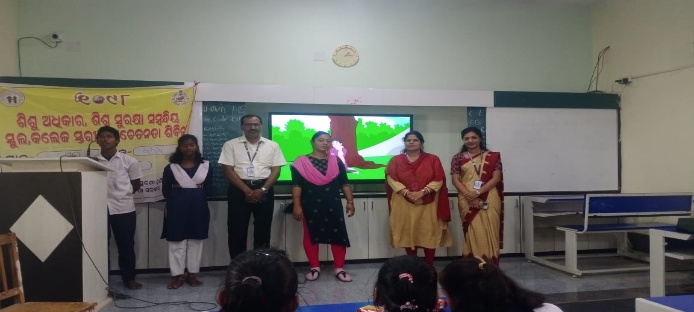
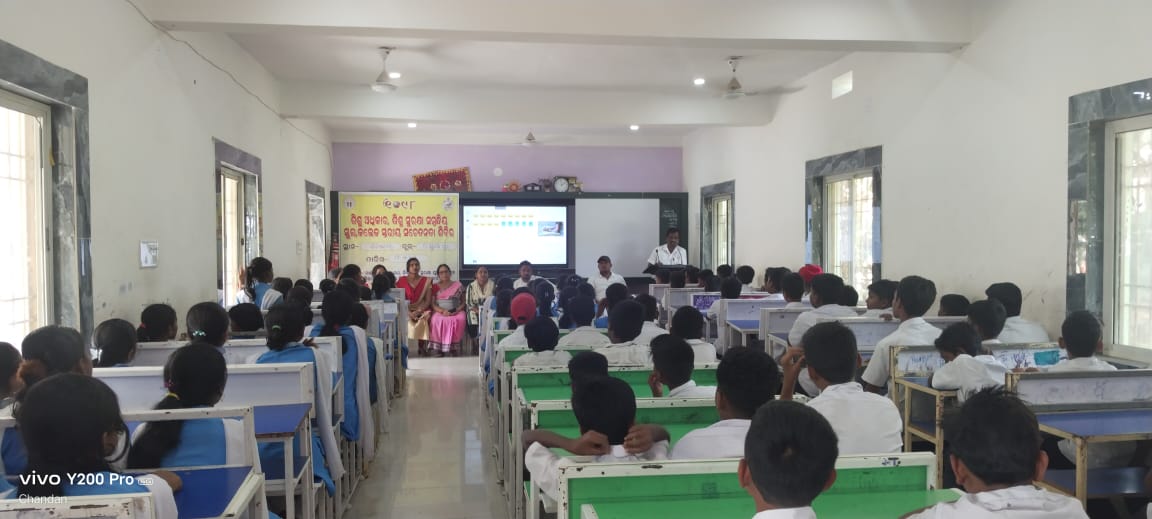
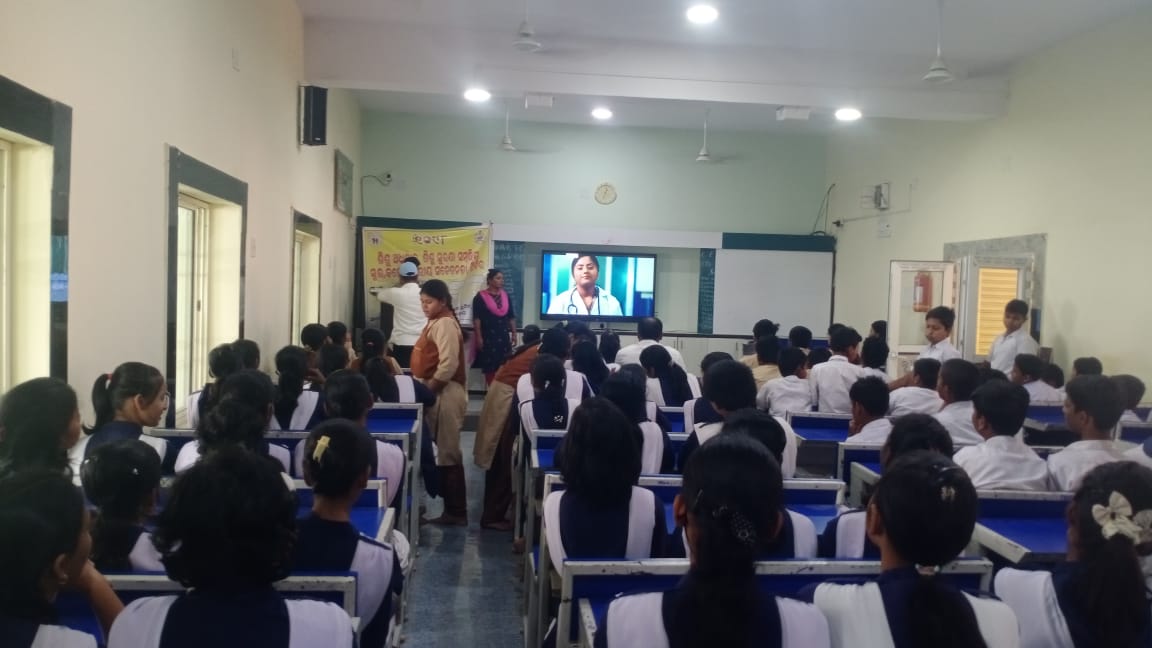
Child Helpline Bhadrak conducted 10 School Awareness program regarding Child helpline number 1098.